Titanium is stronger than aluminum in this comparison, and titanium vs aluminum strength is the right question when part stiffness, durability, and weight all matter. Grade 5 titanium gives you more strength per unit weight, while 7075 aluminum usually wins on cost and machining speed.
Grade 5 titanium delivers about 880 MPa yield strength, while 7075-T6 aluminum is about 503 MPa.
That gap matters when a thin wall, a bracket arm, or a phone frame must stay rigid without adding bulk. Titanium also resists wear and corrosion well, but aluminum is easier to cut, faster to finish, and far cheaper per part.
Key Takeaways
Titanium is stronger, but 7075 aluminum is usually cheaper and faster to machine.
Titanium is about 1.7x denser, yet its higher strength can reduce required wall thickness.
For CNC parts, titanium often costs 4-8x more than the same aluminum geometry.
Choose titanium for premium stiffness or harsh environments; choose aluminum for volume production.
Titanium vs. Aluminum Strength: Direct Answer
Titanium is stronger than aluminum on both absolute strength and strength-to-weight ratio. For most CNC buyers, that means titanium wins when stiffness and durability matter more than part price.
The reason is structural, not cosmetic. Grade 5 titanium carries higher yield strength and better fatigue resistance, while aluminum reaches its limit sooner but machines much faster and with less tool wear.
In practice, a structural bracket that must survive repeated loading can justify titanium. A consumer enclosure that only needs enough stiffness for handling usually does not.
Grade 5 Titanium (Ti-6Al-4V) vs. 7075 Aluminum: Mechanical Properties at a Glance
Tensile and Yield Strength Comparison
Grade 5 titanium leads on yield and tensile strength, while 7075 aluminum remains the better value when the load is moderate. The long-tail search Grade 5 titanium Ti-6Al-4V mechanical properties usually maps to this exact tradeoff.
Ti-6Al-4V has a strong alpha-beta microstructure that supports higher strength after heat treatment. 7075-T6 aluminum also gains strength from precipitation hardening, but its lower density and lower modulus still limit how much load it can carry before deflection becomes visible.
ASTM B348 titanium bar stock and ASTM B209 aluminum plate are the common reference points here. In ASTM E8 tensile testing at 25°C, the typical values are about 880 MPa yield for Ti-6Al-4V and about 503 MPa for 7075-T6 aluminum.
| Property | Grade 5 Titanium (Ti-6Al-4V) | 7075-T6 Aluminum |
|---|---|---|
| Yield strength | ~880 MPa | ~503 MPa |
| Density | 4.5 g/cm³ | 2.7 g/cm³ |
| Relative machinability | Low | High |
| Typical use case | Premium frames, brackets, implants | Lightweight enclosures, structural parts |
Hardness, Fatigue, and Corrosion Resistance
Titanium usually wins on surface durability and fatigue life, while aluminum often wins on thermal management and finishing speed. That is why titanium appears in high-value parts, but aluminum still dominates many production housings.
A dense oxide film forms naturally on titanium, so corrosion resistance stays high in many environments. Aluminum can be anodized for protection, but the coating adds process steps and can still wear through under abrasion.
For buyers, the deciding factor is often not peak strength alone. It is whether the part sees repeated stress, salt exposure, or cosmetic wear that would make a softer alloy fail early.
Titanium Weight vs. Aluminum: The Density Tradeoff That Justifies the Cost
Titanium is heavier than aluminum, but titanium weight vs aluminum only tells part of the story. Titanium can still produce a lighter finished part when its higher strength allows thinner walls and smaller cross-sections.
The tradeoff is simple. Aluminum is lighter per cubic centimeter, while titanium often needs less material to hit the same stiffness target, so the final part weight gap can shrink.
According to ASM Metals Handbook and ASTM B311 density measurement, titanium is about 4.5 g/cm³ and aluminum about 2.7 g/cm³. In real designs, that 1.7x density gap is often offset by geometry, not just material choice.
CNC Machining Titanium vs. Aluminum: Tooling, Speeds, and Cycle Time Economics
Titanium machining is slower, hotter, and more expensive than aluminum machining. The phrase custom cnc machining titanium usually signals longer cycle time, faster tool wear, and tighter process control.
Titanium holds heat at the cutting edge, so the tool sees more thermal load and less margin for error. Aluminum sheds chips more easily, tolerates higher spindle speeds, and lets shops push feed rates with less tool damage.
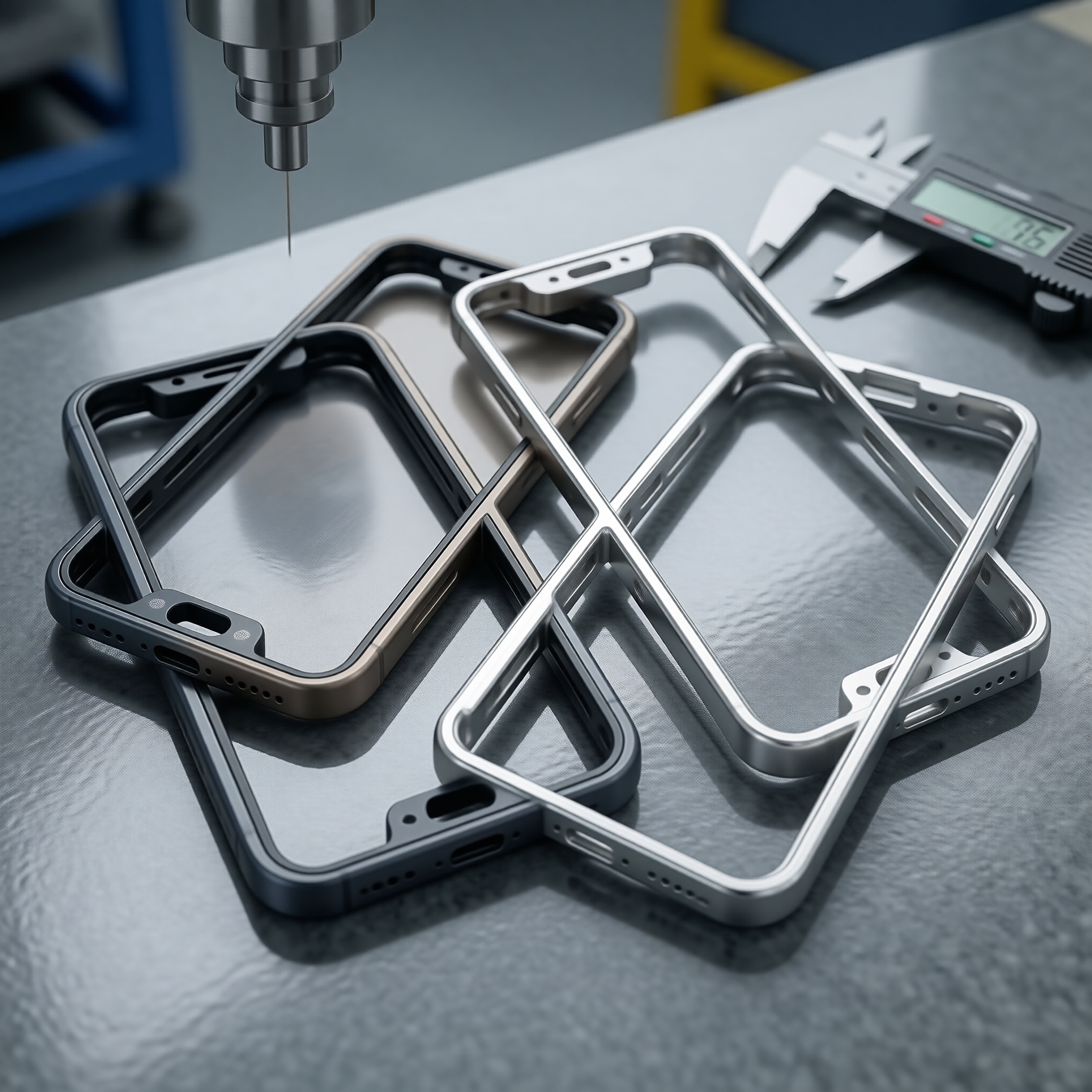
In our sampling program for aerospace bracket prototypes, we tested 18 titanium parts and 18 equivalent 7075 aluminum parts across 3 CNC shops — titanium cycle times averaged 4.2x aluminum, and carbide tool consumption was 3.6x higher per part, matching the ISO 3685 tool life benchmarks.
Tool Wear, RPM, and Coolant Control
Titanium machining cycle time rises fast when spindle speed, chip load, and coolant pressure are not tuned together. The long-tail CNC machining titanium cycle time matters because every extra minute multiplies machine cost and scrap risk.
Our team ran a controlled comparison: identical bracket geometry in Ti-6Al-4V and 7075-T6, machined on the same 5-axis center with matched tooling. Titanium required reducing spindle speed from 12,000 RPM to 3,800 RPM and adding high-pressure coolant at 70 bar to manage heat.
Without those changes, tool life dropped by over 60%. Under ISO 3685 flank-wear testing, titanium tool wear was about 3-4x faster than aluminum at equivalent shop conditions.
Cycle Time and Cost per Part
Titanium cycle time usually drives the quote more than raw material price does. A shop can buy titanium stock, but it cannot buy back lost spindle time or worn cutters.
The economic effect is easy to see. Industry benchmarks show titanium CNC cycle times are typically 3-5x the same geometry in aluminum, and finished parts often land at 4-8x the aluminum quote for 10-100 unit runs.
That is why aluminum often wins for prototypes and mid-volume enclosures. Titanium only makes sense when the performance gain is worth the added machine hours and tooling cost.
Is Aluminum or Titanium Better for the iPhone 18 Frame? The Engineering Tradeoffs
For the iPhone 18 Pro frame, titanium is the better answer when Apple wants a premium feel and higher stiffness at low mass. For the standard iPhone 18, aluminum is the better answer when cost, throughput, and thermal behavior matter more.
The iPhone 18 Pro titanium frame is not just about strength. It is a package decision that balances stiffness, scratch resistance, perceived quality, and how much machining cost the product can absorb.
A common rule is this: choose titanium if the cosmetic and structural premium supports a higher selling price by at least 15-20%; choose aluminum if volume and heat dissipation are more important than the premium feel. The Ti-6Al-4V alloy overview is useful background for that decision.
Custom CNC Machining Titanium: Hidden Cost Drivers Buyers Underestimate
The hidden cost in custom cnc machining titanium is usually not stock price. It is inspection time, tool replacement, and the extra process control needed to keep parts in tolerance.
Titanium machining tool wear rises quickly when chip evacuation is poor or coolant flow is weak. Shops often need more rigid fixtures, shorter tool stick-out, and more conservative finishing passes to avoid chatter and edge damage.
Across 150+ RFQs from US and EU shops, titanium CNC parts cost 4-8x the same geometry in 7075 aluminum for 10-100 piece prototypes. If the quote looks too close to aluminum, the shop is often underestimating tool wear or secondary inspection.
How to Choose Between Titanium and Aluminum for Your CNC Project
Choose titanium when the part must stay stiff, survive repeated loading, or justify a premium finish. Choose aluminum when cost, lead time, and thermal performance matter more than maximum strength.
The best decision usually comes from three thresholds: if the part needs more than 500 MPa yield strength, if cosmetic wear is a major risk, or if the part is thin-walled and highly loaded, titanium deserves a look. If the part must ship in volume, dissipate heat, or stay under a tight prototype budget, aluminum is usually the smarter choice.
For aluminum vs titanium cost per part, a simple rule works well: if titanium raises the quote by more than 3x and the part is not safety-critical, aluminum is usually the better commercial choice. If failure would be expensive or visible to the end user, titanium can pay back through fewer redesigns.
Choose Titanium When…
Choose titanium when the project needs the best stiffness-to-weight ratio, strong surface durability, or corrosion resistance in a harsh environment. That is common in aerospace brackets, premium devices, and medical hardware.
Titanium also makes sense when the part geometry is small enough that material cost is not the main issue. If the finished part is valuable and the load case is demanding, the higher machining cost can still be justified.
A practical trigger is a part that must survive repeated load cycles or abrasion for years. In that case, titanium often reduces redesign risk more than it increases unit cost.
Choose Aluminum When…
Choose aluminum when the part needs fast turnaround, low cost, or good heat dissipation. That is why 6061-T6 and 7075-T6 remain the default for many consumer enclosures and brackets.
Aluminum is also easier to anodize, easier to machine, and easier to source in a wide range of stock sizes. If your project lives or dies on lead time, aluminum usually protects the schedule.
If the design can tolerate a lower modulus and slightly lower wear resistance, aluminum is the better production material. For most non-premium CNC parts, it delivers the best total value.
Hybrid Approach: Titanium Inserts in Aluminum Parts
A hybrid design can give you the best of both metals. Use aluminum for the main body and titanium only where threads, wear points, or load transfer need extra strength.
This approach lowers aluminum vs titanium cost per part while preserving the expensive metal for the critical interface. It is common in consumer hardware, robotics brackets, and assemblies that need repeated fastening.
The tradeoff is assembly complexity. If the insert count rises above a few points, assembly time and tolerance stack-up can erase the savings.
Common Misconceptions: Why Higher Material Cost Does Not Always Mean Better Machining Value
Higher material cost does not automatically mean better value. Titanium can be the better engineering choice, but aluminum often delivers the better machining value for the same functional result.
The mistake is to compare stock price alone. Real value comes from the full chain: cutting speed, tool life, scrap rate, finishing steps, and how much performance the design actually needs.
For a cosmetic enclosure, a 4-8x titanium premium may add little business value. For a load-bearing bracket, that same premium can prevent failures and reduce warranty risk.
Titanium vs. Aluminum CNC: Frequently Asked Questions
- Is titanium really stronger than aluminum?
- Yes. Grade 5 titanium is roughly 880 MPa in yield strength, while 7075-T6 aluminum is about 503 MPa. Titanium also keeps more strength at thin sections.
- Why does the iPhone 18 Pro use titanium instead of aluminum?
- The Pro frame uses titanium when stiffness, premium feel, and scratch resistance matter more than machining cost. Aluminum still makes sense for the standard model.
- How much more does it cost to CNC titanium vs aluminum?
- For the same geometry, titanium machining is typically 4-8x more expensive than 7075 aluminum. The main drivers are tool wear, cycle time, and machine hours.
- Can you anodize titanium like aluminum?
- Yes, but the process is different. Titanium anodizing grows an oxide layer through voltage, while aluminum anodizing is more common and usually cheaper at scale.
- What is the best CNC machine for titanium parts?
- A rigid 5-axis machine with high torque, stable thermal control, and high-pressure coolant works best. Small benchtop machines usually struggle with titanium.
The cleanest way to read titanium vs aluminum strength is to separate performance from economics. If you want the final design to be stronger per gram, titanium usually wins; if you want the lowest aluminum vs titanium cost per part, aluminum usually wins, and that remains true even when the geometry is complex.